Sintered Stone vs. Artificial Quartz: A Comprehensive Comparison
When it comes to selecting materials for countertops, flooring, and various architectural elements, two popular options often come up: sintered stone and artificial quartz. Each material has distinct characteristics, advantages, and potential drawbacks. Understanding these differences can help homeowners, builders, and designers make informed choices.
What is Sintered Stone?
Sintered stone is a high-performance surface material created through the process of sintering, where natural raw materials—such as clays, feldspar, and silica are subjected to high temperatures and pressures. This process results in a dense, durable product that mimics the appearance of natural stone. Sintered stone is highly resistant to scratches, stains, and heat, making it an ideal choice for kitchens and bathrooms.
Benefits of Sintered Stone
1. Durability: Sintered stone is exceptionally tough and resistant to wear and tear, making it suitable for high-traffic areas.
2. Low Maintenance: It does not require sealing and is easy to clean, as it is non-porous.
3. Design Versatility: Available in a wide variety of colors and patterns, sintered stone can replicate the look of natural stone or offer unique designs.
4. Eco-Friendly Options: Many manufacturers use sustainable practices and materials in the production of sintered stone.
What is Artificial Quartz?
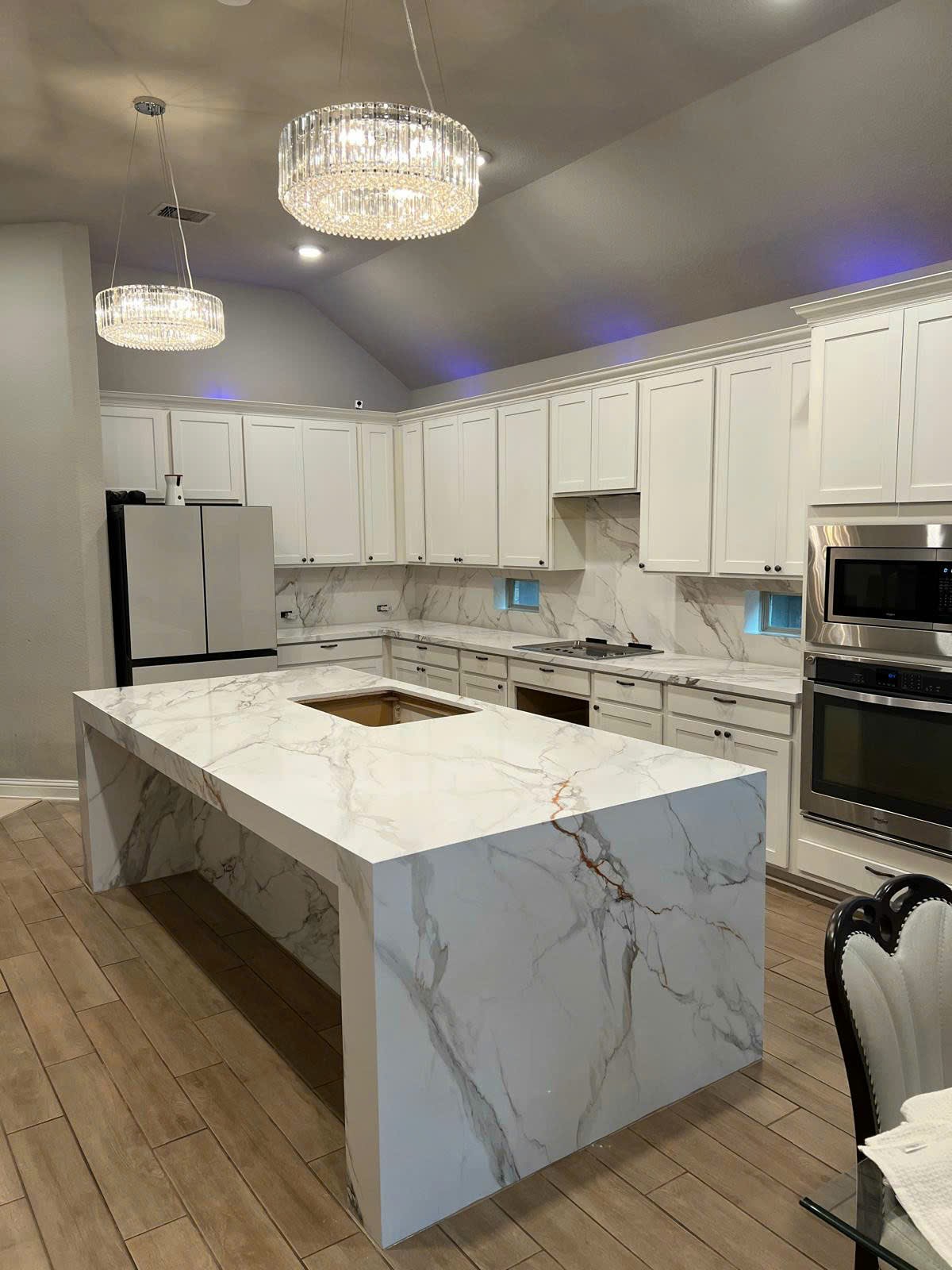
Artificial quartz, also known as engineered stone, is composed of approximately 90-95% crushed natural quartz crystals mixed with resins, polymers, and pigments. This combination is then molded and cured to form slabs. While artificial quartz can closely resemble natural stone, it is designed to be more uniform in appearance.
Benefits of Artificial Quartz
1. Variety of Colors and Patterns: Artificial quartz offers a vast array of colors, styles, and finishes, appealing to various design preferences.
2. Non-Porous Surface: Like sintered stone, it is non-porous, making it resistant to stains and easy to maintain.
3. Heat and Scratch Resistance: While not as heat-resistant as sintered stone, it still provides good durability for everyday use.
4. Affordability: Typically, artificial quartz is more budget-friendly compared to sintered stone.
Key Differences
1. Composition
Sintered stone is made from 100% natural materials, while artificial quartz consists of a significant percentage of resin and polymers. This difference in composition affects their overall durability and environmental impact.
2. Heat Resistance
Sintered stone generally offers better heat resistance compared to artificial quartz, making it more suitable for environments that experience high temperatures, such as near stovetops.
3. Appearance
While both materials can mimic the look of natural stone, sintered stone often has more depth and texture due to its natural composition. Artificial quartz, on the other hand, provides a more uniform look.
4. Installation
Both materials require professional installation; however, sintered stone can be heavier and more challenging to work with due to its density, potentially increasing labor costs.
Conclusion
In conclusion, both sintered stone and artificial quartz have their unique advantages and drawbacks. Sintered stone stands out for its superior durability and heat resistance, making it ideal for high-use areas. On the other hand, artificial quartz offers affordability and a wide range of design options, appealing to a broader audience. Ultimately, the choice between sintered stone and artificial quartz will depend on individual needs, preferences, and budget considerations. By weighing these factors, you can select the best material for your project.