
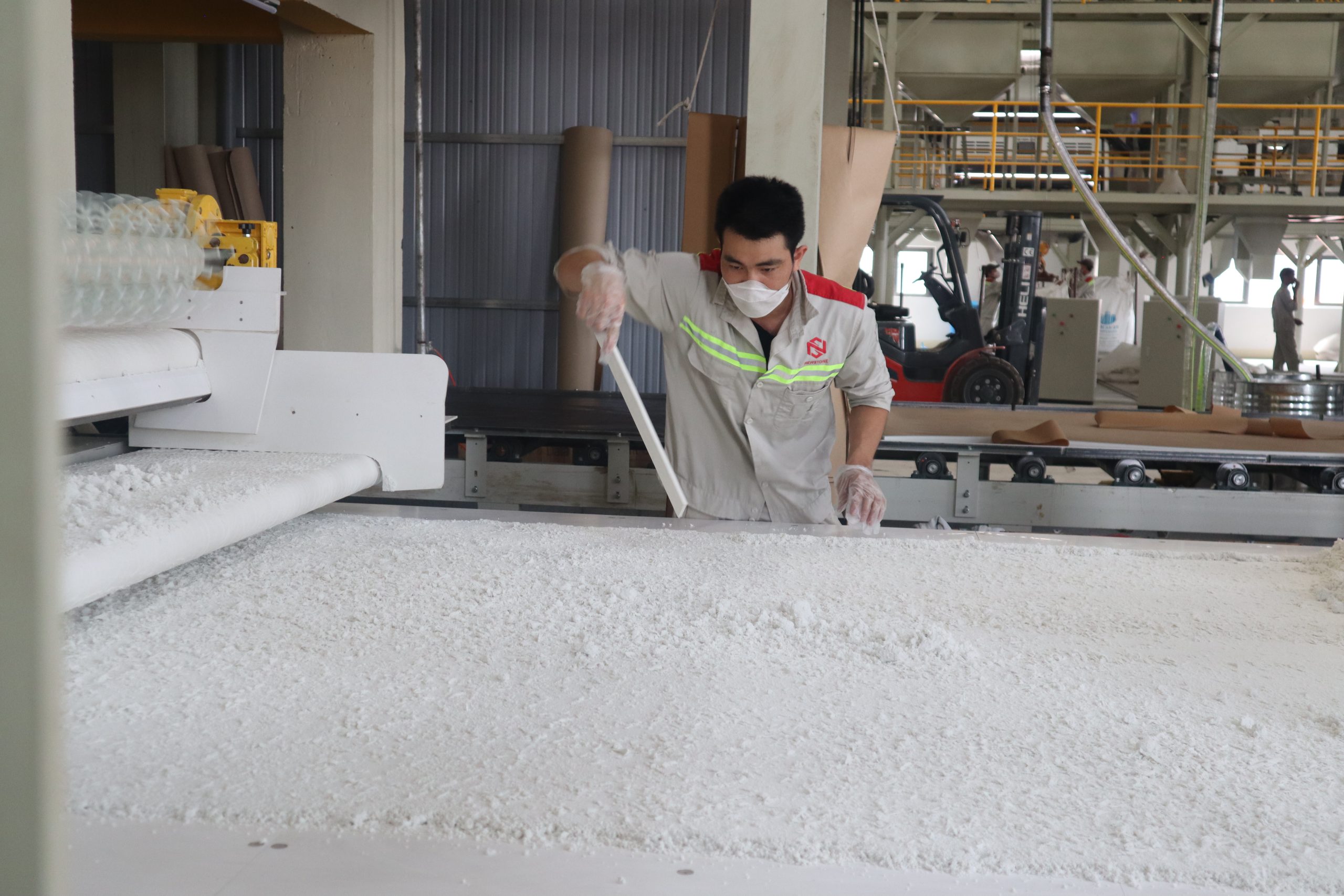
Limiting silica exposure when working with quartz, especially in construction or manufacturing environments, is essential for protecting health. Here are some effective strategies:
Use Wet Methods
Wet Cutting and Grinding: Use water during cutting, grinding, or polishing to minimize dust generation. This keeps silica particles contained.
Mist Systems: Implement misting systems to further reduce airborne dust.
Proper Ventilation
– Local Exhaust Ventilation (LEV)**: Install LEV systems at dust-generating points to capture silica dust before it disperses into the air.
– General Ventilation**: Ensure the workspace is well-ventilated to dilute any airborne particles.
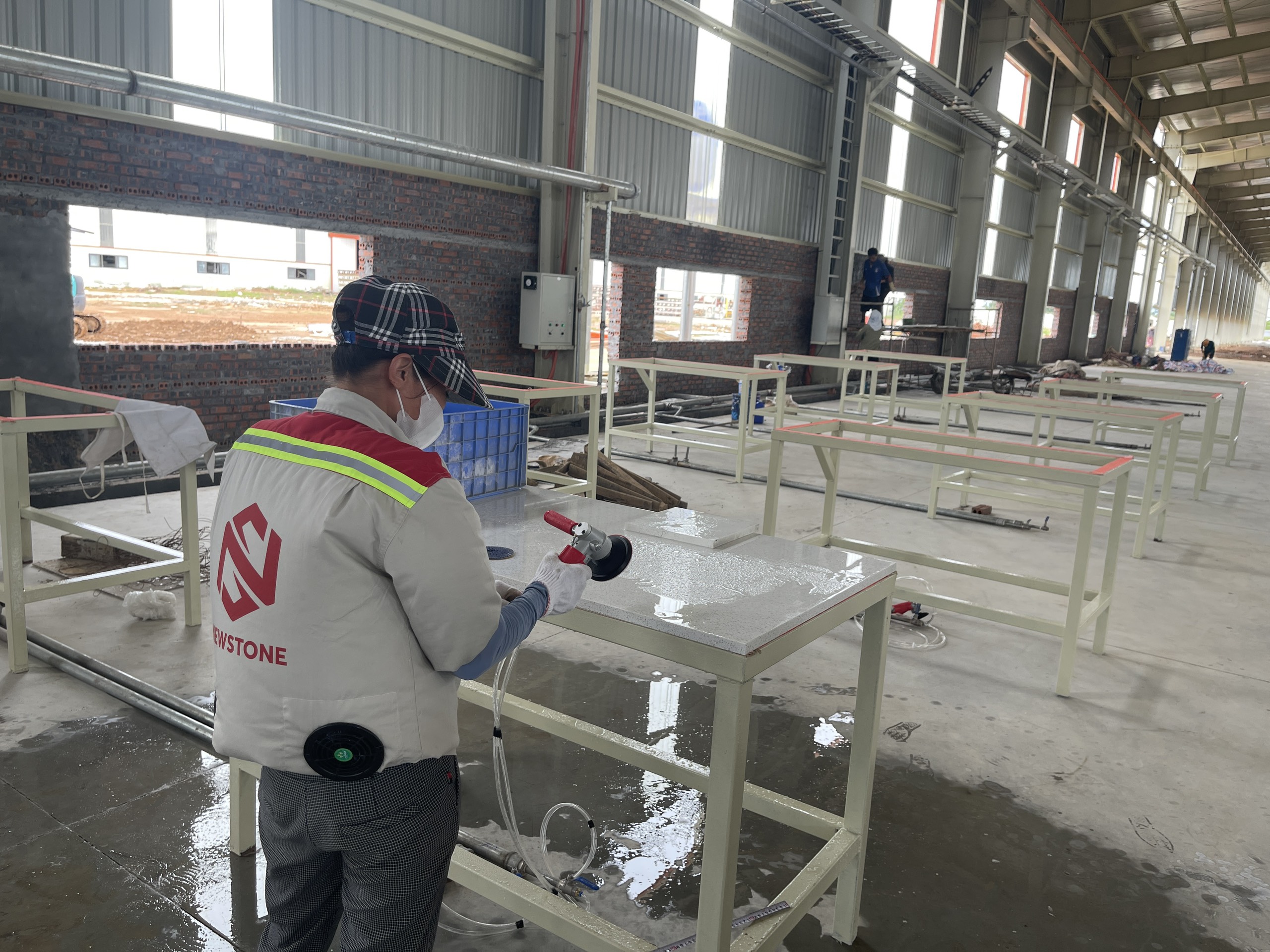
Personal Protective Equipment (PPE)
– Respirators: Provide N95 respirators or higher-rated masks to workers handling quartz materials.
– Protective Clothing: Use coveralls, gloves, and goggles to prevent skin contact and inhalation.
Workplace Practices
Job Rotation: Rotate tasks to minimize individual exposure duration.
Minimize Dust: Keep the workspace clean by regularly using vacuums with HEPA filters and avoiding dry
Training and Awareness
– Educate Workers: Conduct training sessions on the hazards of silica exposure and safe work practices.
– Safety Signage: Post signs to remind workers about silica safety protocols.
Regular Monitoring
– Air Quality Testing: Conduct regular air monitoring to measure silica levels and ensure compliance with safety standards.
– Health Surveillance: Implement health checks for workers who may be at risk.
Material Substitution
– Consider Alternatives: Where possible, use materials that do not contain crystalline silica or have lower silica content.
By implementing these measures, you can significantly reduce silica exposure in environments where quartz is handled, promoting a safer workplace.